
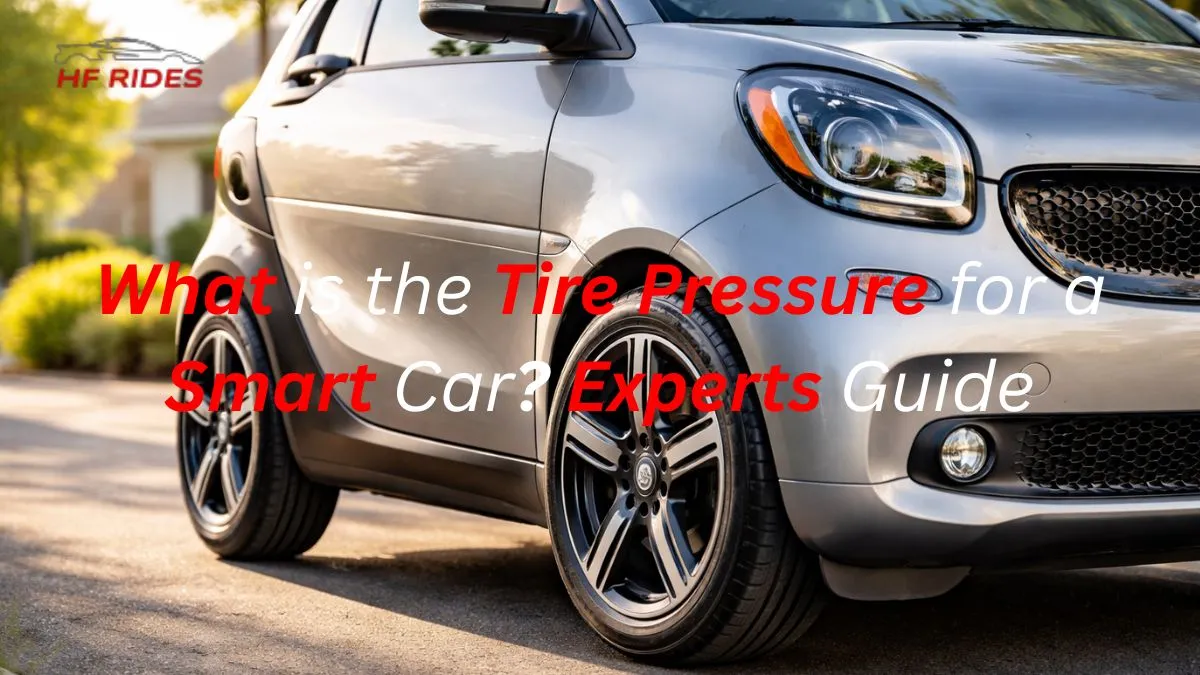
The recommended tyre pressure for a Smart car varies by model and year. For most Smart Fortwo models, the front tyre pressure is 29–33 PSI, while the rear tyres usually require 32–36 PSI. The Smart Forfour tyre pressure can be slightly different depending on load and model year, so always check the owner’s manual or the tyre placard inside the driver’s door for exact values.
Introduction
Knowing what is the tire pressure for a Smart Car is essential for safety, fuel efficiency, and smooth handling. Correct tire pressure improves braking performance, steering response, and overall driving comfort.
Tire pressure can vary depending on the Smart Car model, year, and load conditions. Following the recommended PSI helps reduce uneven tire wear and supports long-term vehicle reliability.
At Hfrides, we’ve carefully researched every detail you need to know about Smart car tire pressure, so you get accurate, practical, and real-world guidance.
Recommended Tire Pressure for Smart Cars
Tire pressure for Smart cars depends on the specific model, production year, and load conditions. Proper car tire care, including maintaining the correct PSI, ensures safe handling, responsive steering, and consistent performance during daily driving.
For most Smart Fortwo models, the recommended tire pressure is 29–33 PSI for the front tires and 32–36 PSI for the rear tires, depending on passenger and cargo load. Keeping the rear tires slightly higher supports better stability in city driving and contributes to overall Smart car tire care.
Smart Forfour, Coupe, and Convertible models follow slightly different tire pressure specifications. Always check the owner’s manual or the tire placard located inside the driver’s door. Regular tire checks and proper car tire care help prevent uneven tire wear, improve fuel efficiency, and reduce the risk of dashboard warning lights.
Front vs Rear Tire Pressure Differences
Front and rear tires on Smart cars often require different tire pressure levels due to the vehicle’s rear-engine layout, weight distribution, and handling characteristics.
Understanding what is the tire pressure for a Smart Car helps owners ensure that the rear tires, which usually carry more weight, are properly inflated to maintain balance and stability on the road.
In most driving situations, especially when carrying passengers or light cargo, keeping the rear tires at the correct pressure recommended in the Smart Car tire pressure guide improves traction and steering response.
This front-to-rear pressure difference also supports smoother cornering and reduces the risk of oversteer during sudden maneuvers.
Correctly balancing front and rear tire pressure according to the recommended PSI ensures stable handling, even tire wear, and improved braking safety. Regularly checking both front and rear tires separately helps maintain consistent performance and prevents uneven wear or dashboard warnings.
Model-Specific Tire Pressure
Tire pressure recommendations for Smart cars can vary significantly by model, production year, and body style. Even within the same lineup, such as the Smart Fortwo, models from 2009, 2012, and 2016 may have slightly different PSI ranges due to changes in suspension setup, tire size, and vehicle weight.
Similarly, Fortwo 450, 451, 454, along with Forfour, Coupe, and Convertible models, follow their own Smart Car tire pressure specifications.
To ensure safety and optimal performance, always refer to the owner’s manual or the tire placard located on the driver’s door frame. These sources provide the most accurate front and rear tire pressure values recommended by the manufacturer.

How Temperature Affects Tire Pressure
Tire pressure naturally changes with temperature. Cold air contracts, lowering PSI, while heat expands it, increasing pressure. Even small changes can affect handling, braking, and tire wear.
During seasonal transitions, failing to adjust tire pressure can cause underinflated or overinflated tires. This may trigger uneven tread wear, reduce fuel efficiency, and cause dashboard warnings.
Smart car owners who regularly monitor and adjust tire pressure report smoother handling and fewer alerts. Small seasonal adjustments help protect tires, improve comfort, and keep driving safe.
Common Tire Pressure Mistakes & Warnings
Incorrect tire pressure can harm your Smart car’s performance. Underinflated tires increase rolling resistance, causing uneven tread wear, lower fuel efficiency, and sluggish handling. Overinflated tires can reduce road grip, wear the center tread prematurely, and affect braking stability.
Common mistakes include ignoring recommended PSI, inflating tires by guesswork, or overlooking TPMS warning lights. Over time, these issues can lead to uncomfortable rides, higher fuel costs, or tire damage.
Regularly monitoring tire pressure keeps inflation correct, ensuring predictable handling, better fuel efficiency, and safer driving in all conditions.
Smart Car Tire Pressure Monitoring System (TPMS)
Smart cars have a TPMS (Tire Pressure Monitoring System) that alerts drivers when tire pressure is too low or high. It helps prevent handling problems, uneven wear, and reduced fuel efficiency.
TPMS works best with regular manual pressure checks. Resetting the system after adjusting tire pressure ensures accurate readings for all tires.
Check TPMS sensors at least once a month and after any inflation or rotation. Smart car owners report that following proper reset procedures reduces unnecessary dashboard alerts and keeps tire pressure consistent, improving performance and driving confidence.
Recommended PSI by Tire Size and Load
Tire pressure on Smart cars can vary depending on the tire size, wheel configuration, and whether the vehicle is loaded or unloaded. Combined with knowledge of the tire weight, this ensures optimal handling and fuel efficiency under different load conditions.
Different tire sizes require specific PSI levels to maintain proper road contact, balanced handling, and consistent braking performance. Using the correct pressure also helps improve fuel efficiency and reduces unnecessary stress on the tires.
Extra passengers or cargo can require slight tire pressure adjustments—always follow the manufacturer’s recommended PSI from the door placard or owner’s manual.
Studies indicate that following the recommended PSI for each tire size and making adjustments based on load conditions improves vehicle stability and extends tire life. Smart car owners who consistently follow these guidelines report smoother driving, more predictable handling, and reduced tire wear over time.
FAQ’s
Common questions asked about the Smart Car tire pressure.
Should I use 32 or 35 tire pressure?
Most Smart Fortwo models recommend 32–33 PSI front and 34–36 PSI rear, depending on load.
Should tire pressure be 30 or 32?
Lightly loaded Smart cars usually perform best at the lower end of recommended PSI; always check your owner’s manual.
Should tire pressure be 35 or 40?
Do not overinflate; stay within the manufacturer-recommended range to ensure safety and optimal performance.
Is 36 tire pressure too high?
36 PSI rear is generally acceptable for most Smart models when loaded, but exceeding limits can affect handling.
Conclusion
Maintaining the correct tire pressure for your Smart car is crucial for safety, optimal handling, and fuel efficiency. Following the manufacturer’s recommended PSI while adjusting for the vehicle’s load, specific model, and seasonal temperature changes helps ensure even tire wear, stable steering, and consistent performance across all driving conditions.
Regular monitoring of tire pressure, combined with proper use of the TPMS, prevents unnecessary dashboard warnings and helps prolong the life of your tires. Small, consistent adjustments based on passenger load or weather conditions further enhance vehicle stability and driving comfort.
This guide has been carefully researched and prepared by the Hfrides team to provide you with accurate, practical, and reliable information on Smart car tire care.
Download Smart Car Tire Pressure PDF: What is the Tire Pressure for a Smart Car pdf

Hfrides.com provides easy-to-understand car maintenance guides and troubleshooting tips. With real hands-on experience, we simplify complex automotive topics. Our goal is to help drivers save money, avoid repairs, and keep their cars running longer.