
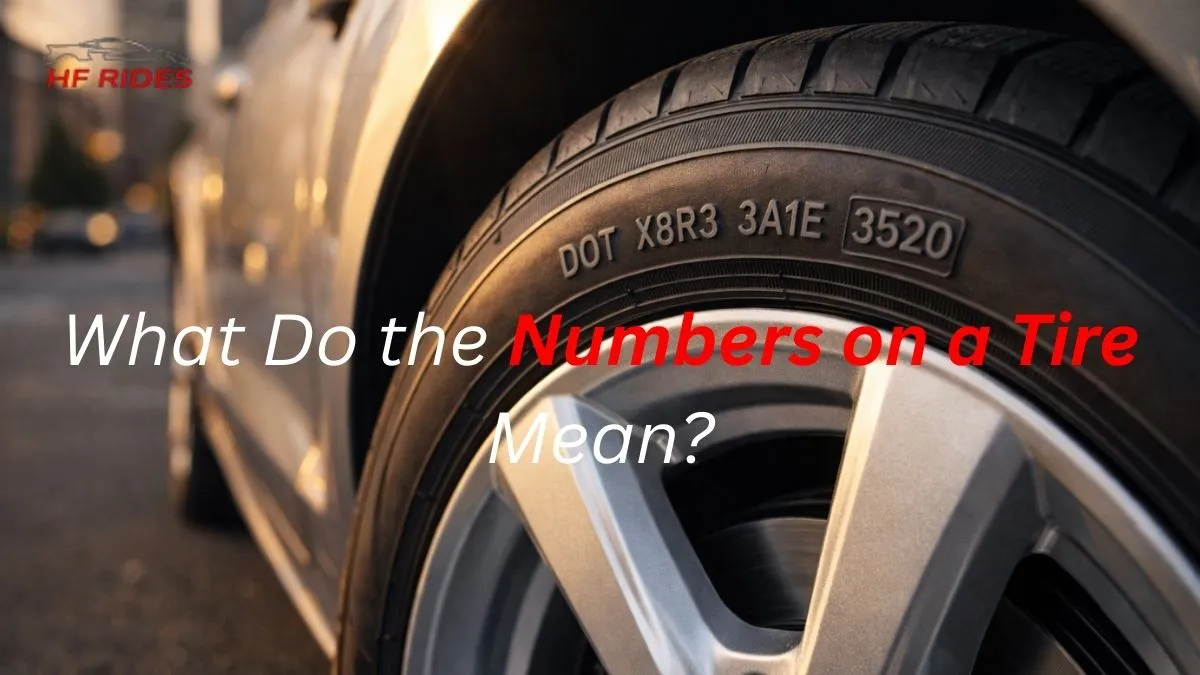
FTIREThe numbers on a tire represent its size, width, aspect ratio, construction type, load index, and speed rating, which determine how much weight it can carry and how fast it can safely travel.
Introduction
If you’ve ever looked at your tire sidewall and wondered, “What do the Numbers on a Tire Mean?”, you’re not alone. Those combinations of letters and numbers — like P225/60R16 97V — might seem confusing at first glance, but they actually tell you everything about your tire’s size, strength, speed capability, and safety limits. Think of them as your tire’s DNA. Every number and letter plays a critical role in how your vehicle handles, brakes, grips the road, and even how much fuel it consumes.
Understanding what the numbers on a tire mean isn’t just helpful — it’s essential. Whether you drive a passenger car, SUV, crossover, or light truck, the correct tire size, load index, and speed rating directly affect traction, stability, braking performance, and fuel efficiency. Choosing the wrong tire isn’t just a minor mistake; it can impact safety, speedometer accuracy, and long-term performance. In this guide, we’ll break down tire code decoding step by step so you can confidently read your tire sidewall like a professional.
Why Tire Markings Matter
Safety and Vehicle Fit
Everything printed on a tire’s sidewall — from size to speed rating — exists for a reason. Each code is engineered with standard information that ensures your tire is suitable for your specific vehicle model and driving demands. Incorrect choices, like picking a tire with a lower load index or a mismatched wheel diameter, can compromise grip, braking, and even cause premature wear.
Tires aren’t just rubber circles. They are precision devices calibrated for specific tolerances and expectations. The codes on your tire help ensure you stick within those parameters — keeping you safe and your vehicle operating properly.
Performance & Efficiency
Look past the safety details, and you’ll see performance implications everywhere. A wheel with a higher speed rating may offer better handling and stability at highway speeds, while a tire with a lower aspect ratio can feel firmer and more responsive — ideal for sportier vehicles. Plus, tire width and size play a role in fuel economy, too. Wider tires often mean more rolling resistance, which affects your gas mileage.
Understanding these nuances helps you make choices that balance comfort, performance, economy, and durability.
Tire Code Decoding Explained
Let’s start with the fundamentals: tire size codes.
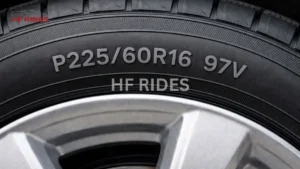
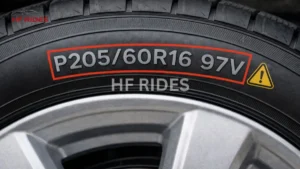
When you look at a typical sidewall marking like “P225/60R16 97V”, you’re seeing several pieces of critical information all in one string. Here’s how each part breaks down:
Tire Type Codes (P, LT, ST, T, C)
These letters indicate the general classification of the tire:
-
P — Passenger tire (standard cars, sedans)
-
LT — Light Truck tire (heavier vehicles like pickups)
-
ST — Special Trailer service
-
T — Temporary spare
-
C — Commercial tires for heavy-duty vehicles
If there’s no letter, it often means Euro-metric sizing used by some international tire standards.
Width (mm)
Right after the type code is a number — for example, 225 — that tells you the tire’s width in millimetres from sidewall to sidewall. The number is a direct measure of how wide the tread is, and a wider tire often improves grip but may affect rolling resistance and fuel efficiency.
Aspect Ratio (%)
This is the percentage number found right after the width — e.g., 60. It refers to the ratio of the tire’s sidewall height to its width. A lower ratio means a shorter sidewall, which usually translates into a firmer ride and better cornering response, at the expense of comfort.
It’s calculated like this:
Sidewall height = Width × Aspect Ratio (%)
So a 225/60 tire has a sidewall that is 60% of 225 mm tall.
Construction Type
Next is the letter “R” in most modern tires, which stands for Radial — the prevailing tire construction type in use today. Older or specialized tires might use “B” for bias construction, but radial designs tend to offer better performance and durability.
Wheel Diameter (inches)
Right after the construction letter is a number like 16 — this number tells you the rim size the tire fits, measured in inches. If the tire size doesn’t match the wheel size of your vehicle, the tire simply won’t fit correctly.
Load Index & Speed Rating
At the end of the size code, you’ll see something like 97V. The numbers are the Load Index, and the letter immediately after is the Speed Rating — two extremely important specifications we’ll unpack next.
Load & Speed Ratings Deep Dive
What is a Load Index?
The Load Index is a numerical code that corresponds to how much weight a tire can safely support when properly inflated. Every load index maps to a maximum load in pounds or kilograms. If a tire with a load index of 95 can support around 1521 pounds, then that’s the maximum weight per tire it’s engineered to carry. If your vehicle plus cargo exceeds that, you risk tire failure — a dangerous scenario.
Load Index Chart Basics
Here’s an abbreviated idea of what load indices mean:
| Load Index | Load Capacity (lbs) |
|---|---|
| 91 | 1356 lbs |
| 95 | 1521 lbs |
| 99 | 1709 lbs |
| 104 | 1984 lbs |
| 110 | 2337 lbs |
| 120 | 3086 lbs |
These charts help you ensure the tires on your vehicle are capable of carrying your car’s weight, passengers, and cargo without strain.
What is a Speed Rating?
The Speed Rating tells you the maximum speed the tire is designed to sustain safely under optimal driving conditions. It’s important to note that this is not a recommendation to exceed legal speed limits, but rather a performance indicator.
Speed Rating Chart
Here’s what some of the most common speed symbols mean:
| Speed Symbol | Max Speed (mph) | Max Speed (km/h) |
|---|---|---|
| Q | 99 | 160 |
| S | 112 | 180 |
| T | 118 | 190 |
| H | 130 | 210 |
| V | 149 | 240 |
| W | 168 | 270 |
| Y | 186 | 300 |
So if you see “97V,” that tire can support the required load and is designed to safely handle speeds up to about 149 mph (240 km/h) under ideal conditions.
Why Load & Speed Matter for Safety
Mixing up load index or speed rating with what’s recommended for your car isn’t just a technicality — it matters for your handling, braking distance, stability, and overall safety. A tire not rated for your vehicle’s load can suffer premature wear or even sudden failure, while a tire with too low a speed rating might not handle heat buildup well at highway speeds.
Put simply: matching your vehicle specs with correct ratings is mandatory, not optional.
Additional Sidewall Markings
Beyond the big size numbers and load/speed rating, there are other codes worth understanding.
DOT Manufacture Week/Year
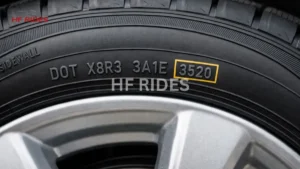
Almost every tire sold in the U.S. and many around the world carries a DOT code — a sequence indicating compliance with safety standards and the tire’s production date. The last four digits show the week and year of manufacture — for example, 1125 means the tire was built the 11th week of 2025. This helps you avoid buying old stock and keeps your safety margin high.
UTQG Tire Grading System
The Uniform Tire Quality Grading (UTQG) is a standardized way to express a tire’s relative:
-
Treadwear — relative longevity
-
Traction — ability to stop on wet pavement
-
Temperature resistance — ability to dissipate heat
A code like 400AA means good treadwear and excellent traction, with top temperature resistance. Keep in mind that UTQG standards are guidelines primarily used in the U.S., and comparisons between brands should be taken with context.
M+S / Winter / All-Season Indicators
You’ll often see markings like:
-
M+S (Mud + Snow) — indicates the tire design suits mild mud or snow conditions.
-
3-Peak Mountain Snowflake symbol — indicates true winter capability.
Seasonal indicators inform you on traction characteristics in specific conditions, helping you choose the right tire for winter, all-season, or off-road use.
Practical Implications of Tire Sizes
Numbers on the sidewall aren’t just academic — they impact your vehicle in concrete ways.
How Wrong Size Affects Handling
If you use a tire that’s too narrow, too wide, or has the incorrect aspect ratio, your steering response, cornering grip, and suspension behavior can change dramatically. Too big a diameter can change ride height and negatively affect stability.
Tire Size & Gas Mileage
Wider and heavier tires increase rolling resistance. This means your engine has to work harder to maintain speed, which can reduce fuel efficiency over time. Balancing grip with economy is key when selecting tires.
Effect on Speedometer Accuracy
Your speedometer is calibrated based on your vehicle’s original tire diameter. Switching to a significantly different tire size alters the overall circumference, which can throw off your speed and odometer accuracy. This matters when obeying speed limits and logging mileage.
Tools & Resources for Tire Selection
Choosing the right tire is easier with modern tools.
Load & Speed Chart Visual Tools
Online charts help you visualize load index and speed ratingcorrelations, which simplifies picking the correct tire. Many tire retailers provide interactive charts or calculators where you enter the code and instantly see specs.
Online Size Selector Tools
Websites and apps allow you to enter your vehicle model and year and get a list of compatible sizes, load indices, and recommended speed ratings — saving you time and guesswork.
Common Mistakes to Avoid
Understanding what to avoid is just as important as knowing what to look for.
Ignoring Load or Speed Ratings
Some drivers focus only on tire size and overlook load or speed ratings. This is a big mistake. Always match or exceed your vehicle manufacturer’s recommended ratings — there’s no safe “shortcut.”
Overlooking the Manufacture Date
Tires age even when not used. Rubber compounds degrade, and old tires can be unsafe, even if they look new. Always check the DOT manufacture date to ensure your tires aren’t older than a few years.
Frequently Asked Questions
Common Questions People Ask About the Tire DOT Code
What does “P225/60R16” mean?
It’s a tire size format: P stands for passenger tire, 225 is the width in mm, 60 is the aspect ratio, R means radial construction, and 16 is the wheel diameter in inches.
Can I use a tire with a lower speed rating than my original?
No, you should not use a tire with a lower speed rating than what your vehicle manufacturer specifies; it can compromise safety.
How do I find my tire’s manufacture date?
Look for the DOT code and read the last four digits — the first two are the week, the last two are the year of production.
What’s the difference between M+S and 3-Peak Mountain Snowflake?
M+S suggests basic mud and snow capability, while the 3-Peak Mountain Snowflake indicates superior winter performance.
Why is UTQG useful?
UTQG ratings help you compare tread life, traction, and heat resistance — giving insight into overall tire quality.
Conclusion
Understanding tire markings unlocks a hidden language that directly impacts your vehicle’s safety, performance, fuel economy, and longevity. From tire code decoding to load & speed explanation, and from additional sidewall markings like UTQG and DOT codes, being informed makes you a smarter, safer driver. The next time you look at your tire sidewall, you’ll know exactly what you’re looking at — and why it matters.

Hfrides.com provides easy-to-understand car maintenance guides and troubleshooting tips. With real hands-on experience, we simplify complex automotive topics. Our goal is to help drivers save money, avoid repairs, and keep their cars running longer.