
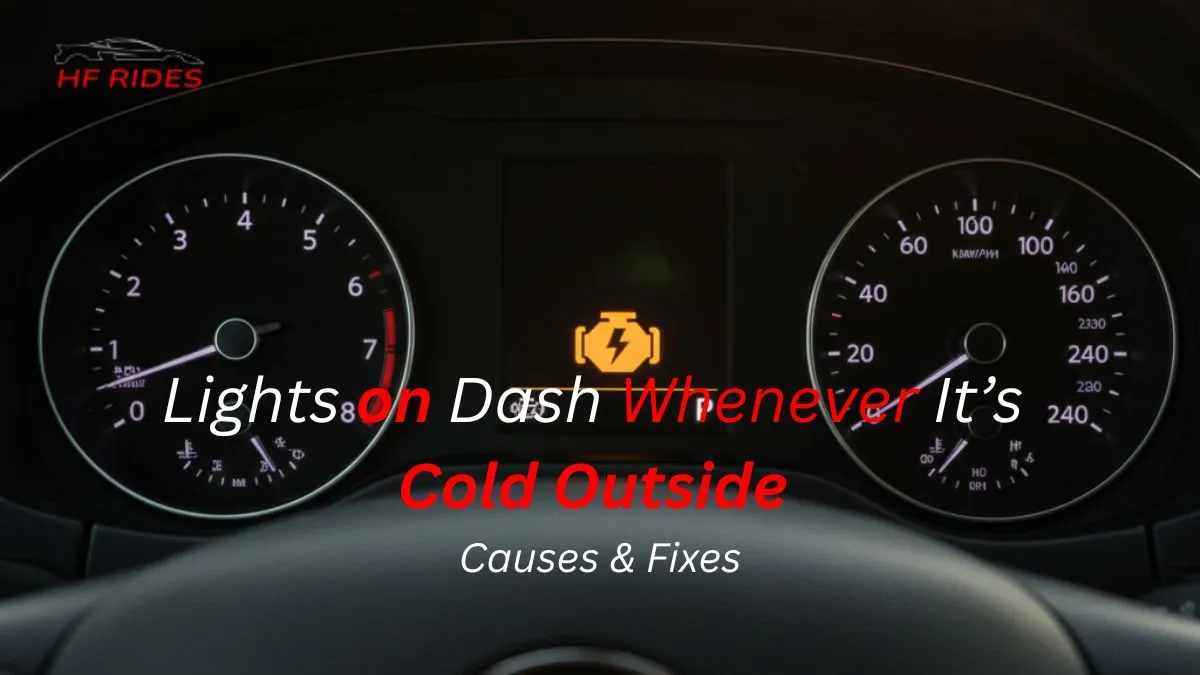
When lights on dash come on whenever it’s cold outside, the most common cause is temporary stress on your car’s electrical and sensor systems. Cold temperatures reduce battery voltage, thicken engine fluids, and slow sensor response times. As a result, your vehicle may briefly detect abnormal readings during cold starts and trigger warning lights. In most cases, these lights turn off once the engine warms up, but persistent or flashing lights may indicate an underlying issue.
Introduction
Seeing lights on dash whenever it’s cold outside can be confusing, especially when those warning lights disappear after a short drive.
Cold temperatures place temporary stress on your car’s battery, sensors, and fluids during startup, which can trigger dashboard alerts.
Understanding why this happens, which lights are normal in winter, and when a warning signals a real problem helps you avoid unnecessary repairs and stay safe on the road during cold weather.
Why Do Dashboard Lights Appear Only in Cold Weather?
Cold weather affects how your car’s systems operate. Batteries lose efficiency in low temperatures, engine oil and coolant become thicker, and electronic sensors respond more slowly.
During a cold start, your vehicle performs multiple system checks at once. If any reading falls outside the normal range, even temporarily, a warning light may appear.
This is why many drivers notice dashboard warning lights in winter mornings that disappear after a short drive. While often normal, understanding which lights are harmless and which require attention is key to avoiding breakdowns and unnecessary repairs.
Is This Normal or a Sign of a Real Problem?
Not all cold-weather dashboard lights mean something is wrong. Some are temporary and expected, while others signal real issues.
Normal winter behavior includes:
-
Lights that turn off after a few minutes of driving
-
Single warning lights appearing briefly during cold starts
-
TPMS or battery lights after overnight freezing temperatures
Possible problems include:
-
Lights that stay on continuously
-
Flashing warning lights
-
Multiple dashboard lights appearing at once
If a light doesn’t turn off after the engine warms up, it’s best to investigate further.
Common Dashboard Lights Triggered by Cold Weather
| Dashboard Light | Why Cold Triggers It | What You Should Do |
|---|---|---|
| Battery Light | Reduced battery voltage in cold temps | Warm vehicle, test battery if recurring |
| TPMS | Cold air lowers tire pressure | Inflate tires to recommended PSI |
| Check Engine | Sensor misreads during cold starts | Scan if persistent or flashing |
| ABS / Traction | Wheel slip or frozen sensors | Clear snow/ice, inspect if constant |
| Coolant Temp | Slow engine warm-up or thick coolant | Check coolant level and mix |
| Oil Pressure | Thick oil flows slowly | Check oil level and viscosity |
| Washer Fluid | Fluid freezing in reservoir | Use winter-grade washer fluid |
Detailed Breakdown of Each Light
What each warning light means, why it appears in cold weather, and how to respond safely.
Battery Warning Light
Cold temperatures slow the chemical reaction inside your battery, reducing its ability to supply power. Older or weak batteries are especially prone to triggering warning lights in winter. If the light appears frequently, have the battery tested and inspect terminals for corrosion.
TPMS (Tire Pressure Monitoring System) Light
Air contracts in cold weather, reducing tire pressure overnight. Even a small drop can trigger the TPMS light. Refill tires to the manufacturer’s recommended PSI. If the light persists, a slow leak or faulty sensor may be the cause.
Check Engine Light
Cold starts can stress ignition components and sensors, causing temporary misreadings. A solid light that turns off is usually harmless, but a flashing check engine light signals potential misfires and should be addressed immediately.
ABS and Traction Control Lights
Snow, ice, or slush can confuse wheel speed sensors. Brief illumination is normal on slippery roads, but lights that remain on may indicate sensor blockage or wiring issues.
Coolant Temperature Light
Engines take longer to reach operating temperature in winter. Low coolant levels, improper antifreeze mixture, or a faulty thermostat can cause the warning to appear.
Oil Pressure Light
Cold oil becomes thicker and flows more slowly, especially if it’s old or incorrect for winter conditions. Persistent oil pressure warnings require immediate inspection.
Washer Fluid Light
Freezing temperatures can prevent washer fluid from flowing. Always use winter-grade washer fluid to maintain visibility and avoid sensor issues.
What to Do When Dashboard Lights Come On in Cold Weather
-
Observe whether the light turns off after warming up
-
Check basics: battery voltage, tire pressure, fluid levels
-
Clear ice or snow from sensors and wheel wells
-
Avoid long drives if multiple lights appear
-
Seek professional inspection if lights persist or flash
Taking these steps early helps prevent minor winter issues from turning into expensive repairs.
When Cold-Weather Dashboard Lights Are Dangerous
Certain warning lights should never be ignored, even in winter:
-
Oil pressure light
-
Flashing check engine light
-
Battery light that stays on
-
Multiple warning lights at the same time
These indicate potential safety or engine risks. Stop driving if necessary and have a certified technician inspect the vehicle.
Preventive Winter Vehicle Tips
Prevent dashboard warnings before they start:
-
Keep your battery fully charged and terminals clean
-
Maintain proper tire pressure
-
Use winter-grade engine oil, coolant, and washer fluid
-
Regularly clear snow and ice from sensors
-
Inspect brakes, alternator, and charging system before winter
Routine winter maintenance greatly reduces false warnings and improves reliability.
FAQ’s
Common questions asked about dashboard lights appearing in cold weather.
Why do my dashboard lights turn off after driving?
Once the engine warms up and systems stabilize, temporary cold-weather alerts usually disappear.
Is it safe to drive if the lights turn off?
Generally yes, but recurring warnings should still be checked.
Do hybrids react differently in cold weather?
Yes. Battery management systems and sensors in hybrids can be more sensitive to temperature changes.
Why do lights flash only during the first cold start?
Initial cold stress can cause brief sensor misreads that correct themselves once the vehicle warms up.
Can cold weather cause dashboard lights to come on?
Yes. Cold weather can temporarily trigger dashboard lights by lowering battery voltage, thickening fluids, and slowing sensor response. These changes can cause brief abnormal readings during cold starts, especially in winter mornings.
Is it normal for a tire pressure light to come on when it’s cold?
Yes, it’s very common. Cold temperatures reduce air pressure inside tires, which can activate the TPMS light. Once tires are inflated to the recommended PSI or temperatures rise, the light usually turns off.
Does cold weather affect car sensors?
Yes. Cold weather can slow sensor response times and alter electrical signals, especially during startup. This can cause temporary warning lights until the engine and systems reach normal operating temperature.
Can cold weather cause the ABS light to come on?
Yes. Snow, ice, or cold-related sensor issues can affect wheel speed sensors, triggering the ABS light. If the light turns off after driving, it’s usually temporary, but persistent ABS warnings should be inspected.
Conclusion
Dashboard lights coming on whenever it’s cold outside are often caused by temporary changes in battery performance, fluid thickness, and sensor behavior.
Understanding which warnings are normal and which require attention helps you respond calmly and safely.
Monitoring whether lights turn off after warming up, performing basic winter maintenance, and acting quickly on persistent warnings keep your vehicle dependable during colder months.

Hfrides.com provides easy-to-understand car maintenance guides and troubleshooting tips. With real hands-on experience, we simplify complex automotive topics. Our goal is to help drivers save money, avoid repairs, and keep their cars running longer.