
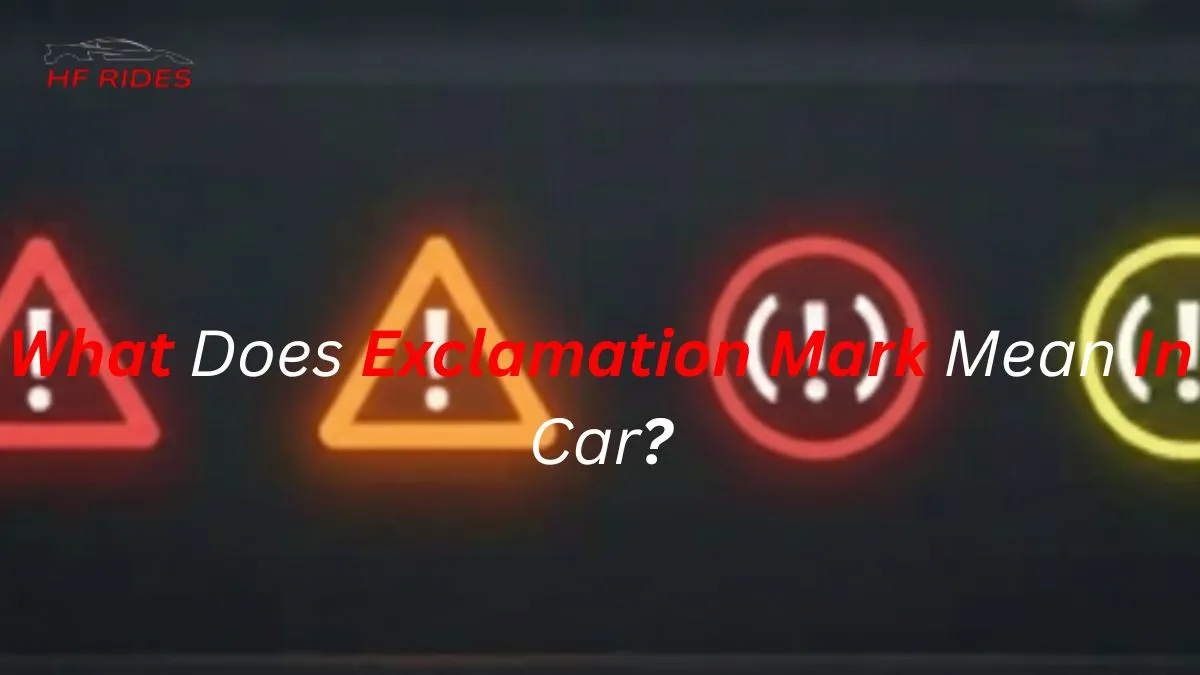
The exclamation mark on a car dashboard is a warning light that indicates an issue with the brake system, tire pressure (TPMS), or a general vehicle alert. A red exclamation mark means stop immediately, while yellow or orange signals caution. The exact meaning depends on the symbol’s shape and your car model.
Introduction
Ever wondered what does exclamation mark mean in car? The exclamation mark on a dashboard is a warning light that signals an issue with the brake system, tire pressure (TPMS), or other vehicle alerts.
A red exclamation mark means stop immediately, while yellow or orange indicates caution. Its exact meaning depends on the symbol’s shape and your car model.
Understanding these icons helps you quickly identify the affected system, take proper action, and stay safe on the road.
Quick Visual Guide: The Exclamation-Mark Icons
Exclamation marks appear in different shapes on your dashboard, each showing a specific warning.
-
A triangle with ! usually signals a general warning.
-
A circle with ! or circle + parentheses often relates to brakes or handbrake issues.
-
A tire icon with ! indicates low tire pressure (TPMS).
-
Other variations, like steering/EPS or bulb + !, show power steering or electrical faults.
Knowing these icons helps you quickly identify which system needs attention.
Exclamation Mark on a Car Dashboard: Meanings by Color and Symbol
The color of an exclamation mark shows how urgent the warning is.
Red means stop immediately-common in brakes or oil pressure alerts.
Yellow or orange signals caution; you can usually drive slowly, but should check soon, like for TPMS or minor faults.
Flashing indicates a serious issue that requires immediate attention, such as a misfire or a critical system alert.
Always check your dashboard messages and act based on color to stay safe.

Is It Safe to Drive With an Exclamation Mark?
Whether it’s safe to drive depends on the icon and its color. Below is our experience-based knowledge on the exclamation mark colors and the action tips we’ve gathered while researching this topic.
-
Red exclamation marks: Stop immediately and pull over.
-
Flashing warnings: Require stopping right away as well.
-
Yellow or orange marks: Be cautious – you may drive slowly to a service station if the car feels normal. Always check your dashboard messages.
Following these simple rules helps prevent damage and keeps you safe while identifying which system needs urgent attention.
Top Causes by Icon and Color
Exclamation marks appear for different reasons depending on the icon and color.
-
TPMS (tire pressure) warnings: often appear due to cold weather, slow air leaks, or faulty sensors
-
Brake system or handbrake alerts: usually indicate low brake fluid, worn brake pads, or that the handbrake is still engaged
-
Master warning triangle: can point to multiple system issues at once like low fuel, low washer fluid, or a general system fault
-
EPS/steering warning with “!”: signals a problem in the electric power steering system, such as reduced power assist or a faulty steering-angle sensor
-
Electrical or bulb icons: typically mean a blown light bulb, wiring issue, or a malfunctioning sensor
Recognizing the cause helps you fix the issue quickly.
Step-by-Step Diagnostics & Fixes
Tools needed: tyre gauge, air compressor, socket set, flashlight, multimeter (optional), OBD-II
scanner (optional).
Step 1 — Quick Visual & Safety Check: Inspect the handbrake, tire pressure, and any visible damage around the vehicle.
Step 2 — Check Tire Pressures: Measure all tire pressures, inflate them to the correct PSI, and then reset the TPMS.
Step 3 — Check Brake Fluid & Handbrake: Top up brake fluid if it’s low and make sure the handbrake is fully released.
Step 4 — Check Dashboard Messages: Read any warning messages or system alerts displayed on the dashboard.
Step 5 — Scan With an OBD-II Tool: Look for common codes such as TPMS faults, ABS codes, BRAKE warnings, or misfires.
Step 6 — Basic Electrical Checks: Inspect battery terminals, alternator output, and connections if multiple warnings appear together.
Quick Reset Tips: Reset the TPMS only after inflating the tires to the recommended pressure. Never reset red warning lights without first addressing the underlying issue.

Brand & Model Notes
-
BMW: Triangle often shows a general fault paired with iDrive messages.
-
Nissan: Circle + ! usually relates to the parking brake or brake fluid; TPMS may blink until driving.
-
Toyota and Honda: Some older models require a manual TPMS reset, and certain warnings appear differently.
Knowing brand-specific quirks helps you quickly understand the problem and take the right action.
Common User Cases
Many drivers encounter exclamation mark warnings in everyday situations.
Case A: On a cold morning, TPMS triggers -> inflate tires -> light clears.
Case B: Brake light comes on with a soft pedal -> low brake fluid -> urgent mechanic visit.
Case C: Triangle appears after a battery disconnect -> ECU message -> simple reboot or scanner reset clears it.
These examples show typical causes, quick checks, and simple fixes for common dashboard warnings.
Prevention & Maintenance Tips
Prevent exclamation mark warnings by keeping up with regular maintenance. Check tire pressure monthly and top up before long trips. Inspect brake fluid and pads at every service.
Avoid overloading your car with aftermarket electrical devices, which can trigger sensor faults. Keep battery terminals clean and secure to prevent electrical warnings.
Regular checks and simple preventive care help reduce dashboard alerts, keep your car running safely, and avoid unexpected stops on the road.

Frequently Asked Questions
These are the common questions people ask about the exclamation mark in a car.
Is it safe to drive with an exclamation mark?
If it’s red or flashing, stop immediately. If the yellow and the car drives normally, carefully drive to a service station.
What does the exclamation mark mean in a car light?
Triangle = general warning; circle = brakes/handbrake; tire symbol = TPMS. Color shows
urgency.
How to fix an exclamation mark light?
Check tire pressure, release the handbrake, top brake fluid, scan codes, or visit a mechanic if unsure.
Why does the exclamation mark appear when it’s cold outside?
Cold weather reduces tire pressure and battery efficiency, which can trigger warning lights temporarily.
Can low brake fluid cause the exclamation mark warning?
Yes, low brake fluid is one of the most common causes of a red exclamation mark warning.
Why did the exclamation mark disappear after restarting the car?
Temporary sensor glitches or voltage drops can reset after a restart, but recurring warnings should be diagnosed.
Is the exclamation mark the same on all car brands?
No, the meaning varies by manufacturer, symbol shape, and system design.
Can I reset the exclamation mark warning light myself?
Some warnings reset after fixing the issue, but brake and safety alerts require professional inspection.
Video tutorial: All types of exclamation marks explained.
PDF File: Keep this PDF Handy in Your Car for Quick Reference. All exclamation lights explained
Conclusion
Seeing an exclamation mark on your car dashboard can be stressful, but understanding what it means helps you stay safe and avoid costly repairs.
From checking tire pressure to monitoring brake fluid and scanning codes, following these steps ensures your car runs smoothly and safely. Regular preventive care not only saves money but also gives you peace of mind on the road.

Hfrides.com provides easy-to-understand car maintenance guides and troubleshooting tips. With real hands-on experience, we simplify complex automotive topics. Our goal is to help drivers save money, avoid repairs, and keep their cars running longer.