
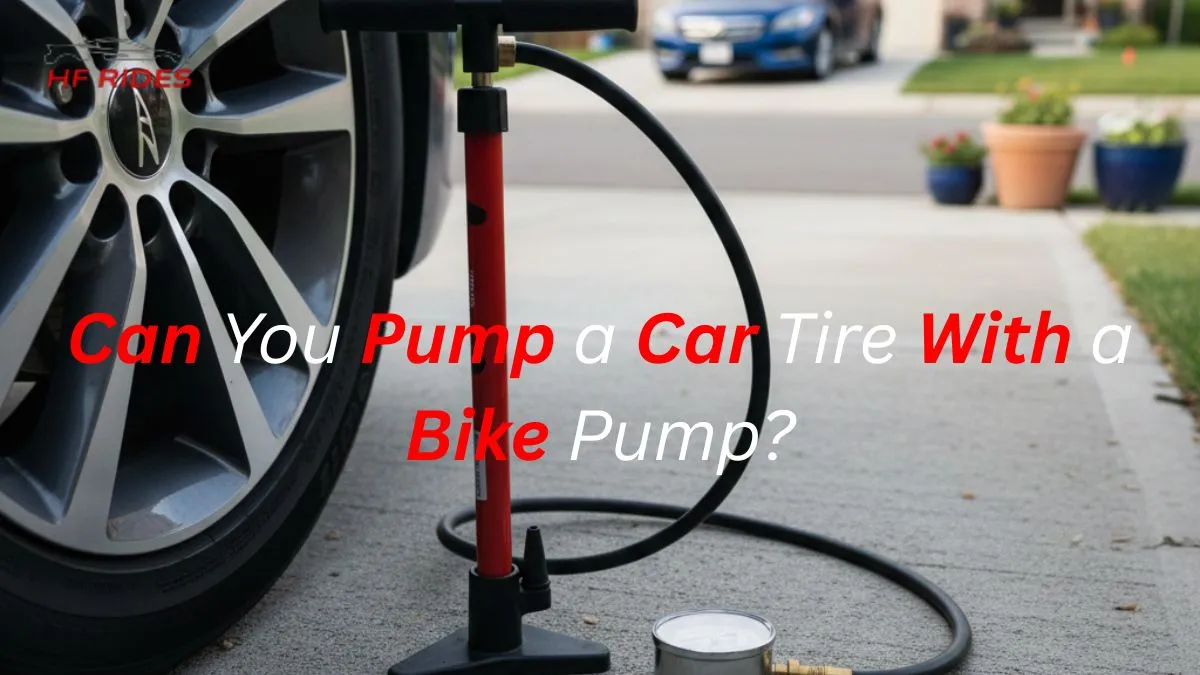
Yes, you can technically pump a car tire with a bike pump, but it’s slow and labor-intensive. Bike pumps deliver high pressure but low air volume, so full inflation can take 20–40 minutes. For faster and safer results, use a portable inflator or gas station compressor.
Introduction
When your car tire loses air, and you don’t have a compressor nearby, you may ask, “Can you pump a car tire with a bike pump?” The short answer is yes, but it’s not ideal for full inflation.
Bike pumps are designed for bicycles, delivering high pressure but low air volume, which makes inflating a car tire slow and tiring. This mismatch is why many drivers consider other options for regular use.
In the USA, many keep a bike pump as a backup emergency tool, especially on highways or in suburban areas where gas station compressors aren’t immediately accessible. This guide explains how to pump safely and what alternatives exist.
Why Using a Bike Pump on a Car Tire is Possible but Inefficient
Technically, a bike pump can inflate a car tire because it generates enough pressure to push air in. However, bike pumps are made for bicycles, not larger car tires.
The main limitation is air volume vs pressure. A standard car tire may require 150–200 strokes, which makes pumping slow and physically tiring.
While it works for emergencies or minor top-ups, it’s not practical for full inflation. Most US drivers rely on portable inflators or gas station compressors for faster and safer results.
User tests in the US report that filling a car tire with a bike pump takes about 35 minutes, with many experiencing hand fatigue after 150–200 strokes, confirming this method is only suitable for emergencies.
Get the one of the reliable BV Bicycle Pump Durable Bike Floor Pump here
Step-by-Step Guide: How to Pump a Car Tire With a Bike Pump Safely
Using a bike pump on a car tire requires caution. While it’s possible, a proper process ensures safety, efficiency, and reduces hand fatigue.
Follow these steps carefully, and monitor tire pressure frequently. This method is suitable for emergency roadside fixes, especially in suburban or highway areas where a portable inflator or gas station is not immediately available.
Many drivers report that following a step-by-step pumping process reduces wasted strokes and helps them reach 30–35 PSI more efficiently, though a full tire still takes 20–40 minutes of pumping.
Check Your Tire Valve Type
Most US car tires use Schrader valves, while some bikes use Presta valves. If your pump only fits Presta, a valve adapter is needed. Ensure a tight seal before pumping to prevent air leaks and maintain efficiency.
Prepare Your Bike Pump
Use a manual or floor bike pump in good condition. Check for leaks or worn parts, and make sure it can handle moderate pressure. Proper preparation reduces the risk of pump damage and hand fatigue.
Begin Pumping Slowly
Attach the pump securely, then inflate with steady strokes. Monitor tire pressure using a gauge. Expect 150–200 strokes for a standard tire. Slow, controlled pumping ensures accuracy and reduces hand strain.
Finish and Seal the Valve
Once the tire reaches the recommended PSI, carefully remove the pump and close the valve tightly. Recheck with a tire pressure gauge to confirm accuracy. Proper sealing prevents air leaks and ensures tire safety.
Risks and Things to Avoid When Using a Bike Pump
Bike pumps are designed for small bicycle tires, so using them on car tires can cause wear or damage to the pump, especially if it’s lightweight or older.
Manual pumping can also lead to underinflation or overinflation, reducing tire performance or causing potential blowouts. Always check pressure with a tire gauge.
Additionally, pumping a car tire requires many strokes, which can cause hand fatigue. Improper valve connection may also lead to air leakage, wasting effort, and risking safety.
Some users report that repeated manual pumping can strain hands in 10–15 minutes. Overinflation occurs in about 5% of cases when pressure isn’t monitored frequently, highlighting the importance of careful attention.
Best Alternatives to a Bike Pump for Car Tires
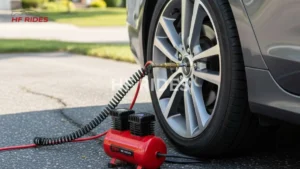
A portable 12V inflator is a fast, reliable alternative. It plugs into your car’s cigarette lighter and can inflate a standard tire in minutes.
Electric compressors are another option. Many come with built-in pressure gauges and automatic shut-off, ensuring accurate PSI and safety.
Most US gas stations provide air compressors for topping up tires. They are ideal for quick roadside inflation, especially on highways or in suburban areas.
Drivers report that portable inflators can fill a standard tire in 5–7 minutes, compared to 20–40 minutes with a bike pump. Electric compressors also prevent hand fatigue and ensure precise PSI every time.
Real User Experiences and Practical Tips
Many US drivers report that manually inflating a car tire with a bike pump is time-consuming and tiring, but it can be useful in emergencies or for minor top-ups.
Breaking the pumping into short bursts with frequent pressure checks helps reduce hand fatigue and ensures accuracy.
Keeping a portable 12V inflator or access to a gas station nearby is recommended for faster, safer tire inflation. Planning prevents unnecessary roadside stress.
Tests and user feedback in the US show that most drivers take 20–40 minutes to inflate a tire manually. Using a backup inflator cuts this time to 5–7 minutes, highlighting the practical benefit of alternatives.
Frequently Asked Questions
Here are the most common questions about pumping a car tire with a bike pump.
How long will it take to fill a car tire with a bike pump?
It usually takes 20–40 minutes for a full fill, depending on the pump and tire size. Expect around 150–200 strokes to reach the recommended PSI.
Can you inflate a car tire with a hand pump?
Yes, a hand pump can inflate a car tire, but it’s slow and tiring. It’s best used only for emergency top-ups or minor pressure adjustments.
How many bicycle pumps to fill a car tire?
A standard car tire may require 150–200 strokes from a bike pump to reach 30–35 PSI. This varies with pump size and tire volume.
Is a bike pump the same as a tire pump?
Not exactly. Bike pumps are designed for smaller tires and deliver high pressure but low air volume. Car tire pumps or compressors are faster and safer for large tires.
Do I need a valve adapter to use a bike pump on a car tire?
Only if your bike pump is designed for a Presta valve. Most car tires use Schrader valves, so an adapter may be required for proper connection.
Is it safe to pump a car tire manually with a bike pump?
Yes, but only for emergency or minor top-ups. Monitor PSI carefully to avoid overinflation or underinflation, and take breaks to reduce fatigue.
What’s the best alternative to a bike pump for car tires?
Portable 12V inflators, electric compressors, or gas station air are faster, safer, and more efficient than manual pumping.
How often should I check tire pressure if I use a bike pump?
Check your tire pressure before and after pumping, and regularly every few weeks. Maintaining correct PSI ensures safety and tire longevity.
Can pumping manually damage my bike pump or tire?
Repeated use on car tires can wear out a bike pump and cause fatigue. Overinflation can also stress the tire or valve, so use carefully.
Can a bike pump be used for emergency roadside fixes?
Yes, it’s suitable for emergency top-ups, especially if a gas station or portable inflator isn’t available. Always carry a tire pressure gauge to monitor accuracy.
Conclusion
Manually pumping a car tire with a bike pump works in emergencies but is slow and physically tiring. It’s best for minor top-ups rather than full inflation.
For faster, safer, and more efficient results, US drivers should rely on portable 12V inflators, electric compressors, or gas station air. Monitoring PSI with a tire pressure gauge ensures accuracy and prevents damage.
US tests show that manual pumping takes 20–40 minutes, while using a portable inflator reduces the time to 5–7 minutes, minimizing hand exhaustion and improving efficiency.

Hfrides.com provides easy-to-understand car maintenance guides and troubleshooting tips. With real hands-on experience, we simplify complex automotive topics. Our goal is to help drivers save money, avoid repairs, and keep their cars running longer.