
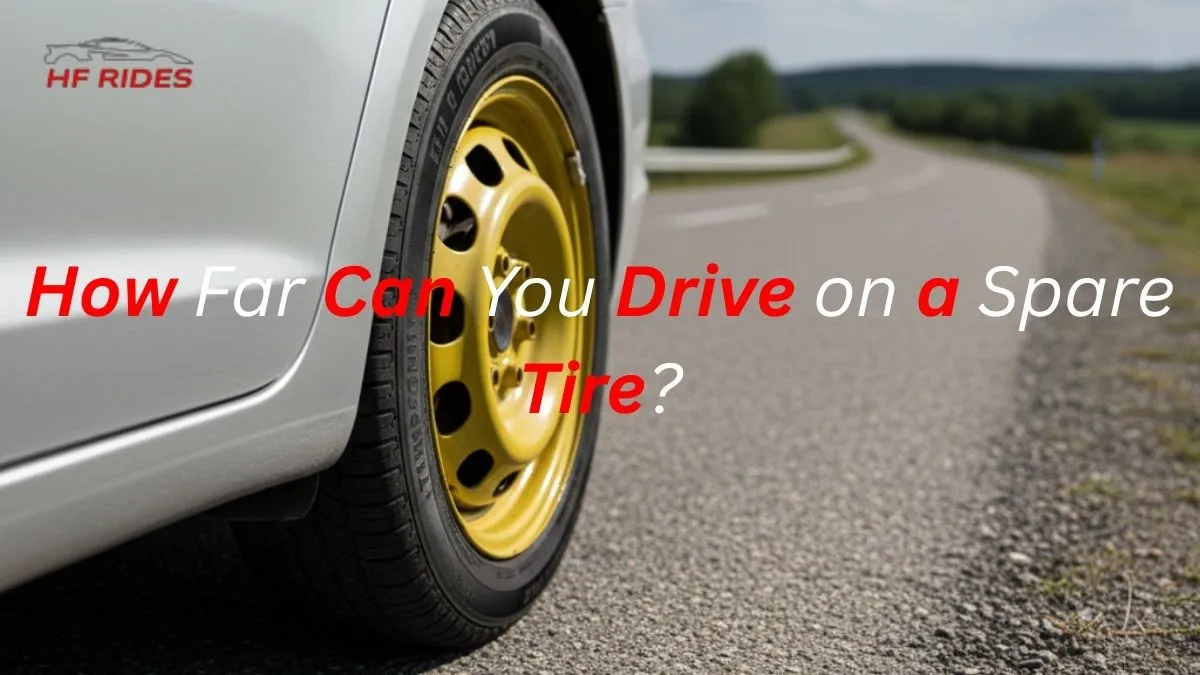
You can usually drive up to 50 miles on a temporary spare tire at speeds under 50 mph. A full-size spare can be driven farther, but it’s still meant for short-term use only until the damaged tire is repaired or replaced.
Introduction
If you’re wondering how far can you drive on a spare tire, chances are you’re dealing with a flat and trying to make a safe decision. Spare tires are designed for temporary use, but the distance you can drive depends on the type of spare, your driving speed, and road conditions.
Driving too far or too fast on a spare can affect handling, braking, and overall safety. Knowing the limits helps you avoid further damage and reach a repair shop without unnecessary risk. This guide explains the safe distance, speed limits, and what you should do next.
Why Spare Tires Have Distance & Speed Limits
Spare tires are designed for temporary use, not long-term driving. Their smaller size, lighter construction, and thinner tread make them less stable at higher speeds. Driving too far or too fast can reduce traction, affect braking, and put stress on your suspension and drivetrain.
These limits exist to keep you safe and prevent unnecessary damage. Understanding and following them ensures your spare performs as intended and helps you reach a repair shop without issues.
Types of Spare Tires
Spare tires come in different types, and each has specific limitations. Temporary or donut spares are small, lightweight, and designed for short distances at low speeds. Full-size spares match your regular tires, offering better stability and handling, but they are still temporary replacements.
Some vehicles also have run-flat tires, which allow limited driving after a puncture but must be replaced quickly. Knowing which spare you have and its limits ensures safe driving and prevents vehicle damage.
Temporary / Donut Spare
Temporary or donut spares are small, lightweight tires made for emergency use only. They are suitable for short distances at low speeds and wear out faster than regular tires.
Because of their compact design and thinner tread, they provide less traction and stability, so it’s important to replace them with a full-size tire as soon as possible.
Full-Size Spare
Full-size spares match your regular tires and provide better stability and handling than temporary spares. They can be driven longer, but still aren’t permanent replacements.
Extended use may affect suspension and drivetrain components. Knowing your spare type and driving within limits helps ensure safe travel and prevent unnecessary vehicle damage.
Run-Flat Tires (If Equipped)
Run-flat tires allow limited driving after a puncture, letting you reach a repair shop safely. They offer more stability than donut spares but still have distance and speed limits.
Exceeding these limits can compromise safety and tire integrity, so replacement should be done promptly after use.
How Far Can You Drive on Each Spare Type
The safe driving distance depends on the type of spare tire. Temporary or donut spares are limited to about 50 miles at speeds under 50 mph. Full-size spares can travel longer distances but still require timely replacement.
Run-flat tires allow more flexibility, usually up to 70–100 miles depending on the vehicle, but exceeding the manufacturer’s limits can compromise safety. Always drive cautiously and follow recommended speed limits for each spare type.
| Spare Type | Safe Distance | Recommended Speed | Driving Conditions | Risk Level |
|---|---|---|---|---|
| Temporary / Donut | Up to 50 miles | Under 50 mph | Dry roads, short trips only | Moderate to High |
| Full-Size Spare | 70–100 miles | Under 60 mph | Normal roads, city & highway | Low to Moderate |
| Run-Flat Tire | 70–100 miles | Follow manufacturer | Dry or wet roads, emergency | Low |
According to research, following these distance and speed limits keeps drivers safe and prevents tire or drivetrain damage.
What Happens If You Drive Too Far on a Spare Tire
Driving beyond a spare tire’s recommended distance or speed can lead to serious problems. You may notice reduced traction, uneven tread wear, and decreased braking performance. Temporary or donut spares can also place extra stress on suspension and drivetrain components, increasing the risk of damage and unsafe driving conditions.
Overextending a spare can lead to vibrations, poor handling, and a higher risk of tire failure, putting both your safety and vehicle at risk. Following the limits ensures you reach a repair shop safely and prevents costly damage.
Investigations reveal that exceeding recommended limits significantly increases the chances of tire failure and drivetrain stress.
Real-World Driving Scenarios
Many drivers wonder if they can make it home or to a repair shop on a spare tire. On short city trips, a temporary spare is usually sufficient if you drive slowly and avoid sharp turns.
Highway or long-distance driving is riskier, especially in the rain or at night. Full-size and run-flat spares give more flexibility, but it’s always safest to plan repairs promptly and drive cautiously.
Reports show drivers who follow speed and distance limits reach repair shops safely in almost all emergency scenarios.

What to Do Before Driving on a Spare Tire
Before hitting the road on a spare tire, always check the tire pressure and ensure it matches the recommended PSI. Confirm the type of spare you have—temporary, full-size, or run-flat—and understand its distance and speed limits.
Drive smoothly, avoid hard braking or sharp turns, and stick to moderate speeds. Proper preparation reduces risks and ensures your spare tire functions as intended until you safely reach a repair shop.
Industry reports suggests drivers who check spare tire pressure and adhere to speed limits face significantly fewer handling or stability issues.
What If the Repair Shop Is Farther Than the Safe Distance?
If the nearest repair shop is farther than your spare tire’s safe range, avoid pushing the tire to its limits. Drive slowly and cautiously, stick to moderate speeds, and take breaks if needed.
If possible, consider calling roadside assistance or towing to prevent damage. Avoid highways or harsh driving conditions, and plan the shortest, safest route. Staying within limits is always better than risking tire failure or vehicle damage.
Can You Drive for Days on a Spare Tire?
Driving for multiple days on a spare tire is not recommended. Temporary spares are designed for short distances, while full-size and run-flat spares are still meant as temporary solutions.
Extended use increases the risk of tire failure, uneven wear, and suspension or drivetrain damage. Even if the spare seems fine, long-term driving compromises safety and can lead to costly repairs. Always replace or repair the damaged tire as soon as possible.
When Should You Replace or Repair the Tire Immediately?
You should replace or repair a tire immediately if you’ve exceeded the spare’s recommended distance or speed, notice vibrations or instability, or see warning lights on your dashboard.
Poor weather, long trips, or repeated use of a temporary spare also signal it’s time for replacement. Acting promptly prevents tire failure, drivetrain stress, and handling issues, keeping both you and your vehicle safe.
Spare Tire Safety Tips Most Drivers Ignore
Many drivers overlook important spare tire safety habits. Check your spare tire pressure regularly, even if it hasn’t been used. Remember that spares can expire over time and may come under-inflated from the factory.
Some vehicles require the spare on a specific axle for safe handling. Always follow the owner’s manual guidance to ensure the spare functions properly during emergencies and prevents unnecessary vehicle damage.
From practical roadside situations, drivers who follow manufacturer guidelines face fewer unexpected failures while driving on a spare.
FAQ’s
Common questions asked about how far can you drive on a spare tire.
Can I go 70 mph on a donut spare tire?
No. Donut spares are designed for low speeds only, usually under 50 mph. Driving faster increases the risk of tire failure and handling issues.
Can a spare tire go 200 miles?
No. Most spare tires, including full-size and temporary spares, are meant for short-term use. Temporary spares are usually safe for up to 50 miles, while full-size spares can handle slightly longer distances.
What happens if I drive 100 miles on a spare tire?
Driving beyond the recommended limit can cause uneven tread wear, reduced traction, and stress on suspension or drivetrain components, increasing the risk of tire failure.
What is the 50–50 rule on spare tires?
The “50–50 rule” refers to driving no more than 50 miles at no more than 50 mph on a temporary spare tire. It helps prevent accidents and vehicle damage.
What happens if I drive more than 70 miles on a spare?
Exceeding safe distance limits increases the risk of tire blowouts, poor handling, and drivetrain stress, even with full-size spares.
What happens if you go over 50 mph on a spare tire?
Driving faster than the recommended speed can reduce traction and stability, particularly on donut spares, increasing the chances of loss of control.
Can I drive on a spare tire for 2 days?
It’s not recommended. Even full-size spares are temporary solutions. Long-term driving can cause uneven wear and potential suspension or drivetrain damage.
Can I drive on a spare tire for 3 days or 2 weeks?
No. Driving for multiple days or weeks on any spare compromises safety and tire integrity. Always replace or repair the damaged tire promptly.
Can you drive on a spare tire on the highway?
You can, but only at low speeds and short distances. Highways increase stress on spares, especially donuts, due to higher speeds and prolonged use.
Can you drive on a spare tire in the rain?
Yes, but cautiously. Wet roads reduce traction, so drive slower than normal and avoid sharp turns to prevent loss of control.
Conclusion
Driving on a spare tire can be safe if you follow the distance and speed limits for your specific spare type. Temporary or donut spares are meant for short distances at low speeds, while full-size and run-flat spares allow slightly longer travel but are still temporary solutions.
Always check tire pressure, drive cautiously, and replace or repair your main tire promptly. Planning routes carefully and adhering to recommended limits ensures your safety, prevents vehicle damage, and avoids unnecessary stress on suspension and drivetrain components.

Hfrides.com provides easy-to-understand car maintenance guides and troubleshooting tips. With real hands-on experience, we simplify complex automotive topics. Our goal is to help drivers save money, avoid repairs, and keep their cars running longer.